
Introduction: The Business Case for Research-Informed Professional Development
In today’s rapidly evolving workplace, professional development is no longer optional—it’s a strategic imperative. Organizations face a striking reality: by 2027, approximately 50% of job skill sets will have changed compared to 2015, making continuous learning essential for survival.
Yet not all training delivers results. The difference between programs that transform performance and those that waste resources lies in one critical factor: whether they’re grounded in research and evidence.
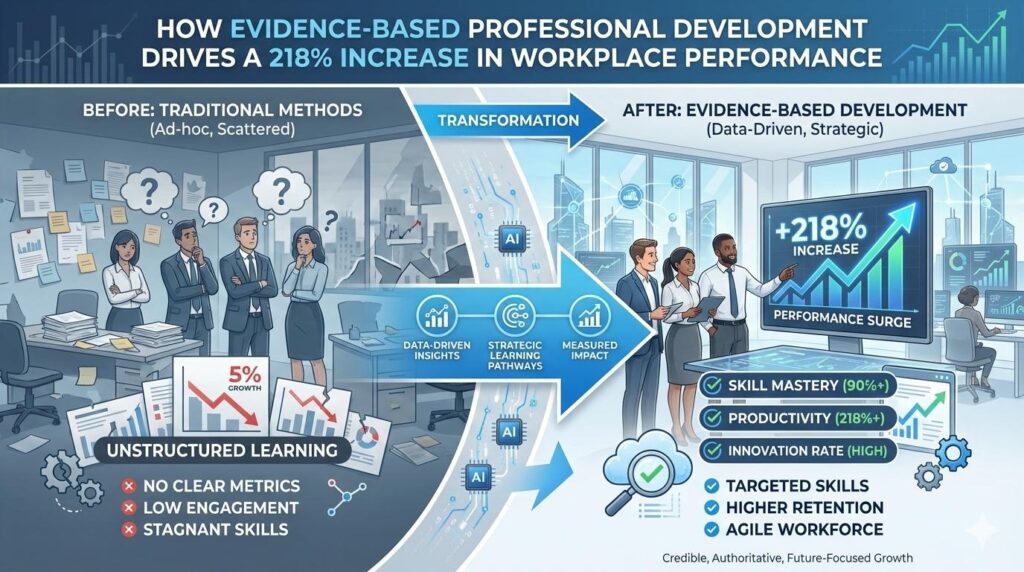
Companies with comprehensive training programs demonstrate 218% higher income per employee than those without formalized training, revealing the substantial financial impact of investing in evidence-based professional development.
This article explores how research-informed professional development (RiPD) transforms workplace performance, backed by current data, proven methodologies, and actionable implementation strategies for 2025 and beyond.
What Is Research-Informed Professional Development?
Research-informed professional development represents a fundamental shift from traditional training approaches. Rather than relying on anecdotal experience or outdated methods, RiPD integrates empirical evidence, scientific findings, and validated best practices into learning initiatives.
Core Principles of Evidence-Based Training
- Performance-Based Focus: Training emphasizes demonstrable skills rather than theoretical knowledge alone
- Competency-Driven: Programs continue until learners meet established proficiency criteria
- Data-Informed: Decisions rely on measurable outcomes and validated research
- Context-Specific: Interventions align with actual workplace challenges and organizational goals
According to Gallup’s workplace research, organizations that strategically invest in employee development report 11% greater profitability and are twice as likely to retain employees.
The Performance Impact: Statistics That Prove ROI
Productivity and Profitability Gains
The financial returns from research-based professional development are substantial:
- 218% higher income per employee for organizations with comprehensive training programs
- Companies are 17% more productive and 21% more profitable when employees receive proper training
- Organizations implementing learning and development practices see productivity increases of up to 37%
Retention and Engagement Benefits
Employee development directly impacts workforce stability:
- 82% improvement in new hire retention through strong onboarding processes
- 94% of employees would stay longer at companies that invest in their development
- 92% of employees believe well-planned training programs positively impact engagement
- 87% of Millennials cite professional development as very important to their job decisions
Time-to-Productivity Improvements
New employees typically require eight months to reach full productivity, with 33% seeking new jobs within six months. Evidence-based onboarding and development programs significantly accelerate this timeline, creating immediate value.
Key Components of Effective Research-Informed Programs
1. Align Learning with Strategic Objectives
Successful programs connect individual development directly to organizational goals. Organizations linking individual goals with upskilling pathways accelerate capability development by 30%.
Implementation Strategy:
- Map competencies to business priorities
- Establish clear performance metrics
- Create transparent career pathways
- Measure impact on strategic outcomes
2. Personalize Development Paths
Development should focus on understanding each person’s unique talents and finding roles that allow them to build strengths.
Research shows that when employees influence their learning:
- They’re nearly 8 times more likely to advance within the organization
- They’re over 5 times more likely to be high performers
3. Implement Continuous Feedback Mechanisms
Of employees who identify as highly engaged, 45% report weekly feedback as a factor. Furthermore, companies implementing regular employee feedback have 14.9% lower turnover.
Best Practices:
- Schedule frequent check-ins
- Focus on strengths during interactions
- Provide immediate, specific feedback
- Create two-way dialogue opportunities
4. Leverage Technology and AI
AI-powered learning increases efficiency by 57% through tailored learning paths. Additionally:
- AI simulation training improved effectiveness by 80% versus traditional methods
- AI roleplay training improved learner confidence by 275% and accelerated time-to-proficiency by 400%
- 91% of companies plan to increase AI spending in learning and development
5. Prioritize Skill Relevance and Adaptability
By 2027, skill sets are expected to change by 50% compared to 2015, with approximately 70% of job skills projected to change by 2030.
Organizations must focus on:
- Future-ready competencies
- Transferable skills
- Continuous upskilling and reskilling
- Adaptive learning frameworks
Research-Backed Implementation Framework
Phase 1: Assessment and Planning
Define Objectives
- Identify specific performance gaps
- Align training goals with business outcomes
- Establish baseline metrics
- Select relevant KPIs (productivity, retention, revenue impact)
Conduct Needs Analysis
- Survey employees about skill requirements
- Analyze performance data
- Review industry trends
- Benchmark against competitors
Phase 2: Design and Development
Apply Evidence-Based Methodologies
- Use competency-based frameworks
- Incorporate active learning principles
- Design for multiple learning modalities
- Build in spaced repetition and practice opportunities
Create Contextual Content Professional development should be closely coupled with specific local contexts rather than predetermined structures.
Phase 3: Delivery and Engagement
Optimize Learning Formats Current employee preferences include:
- 70% prefer online/self-paced courses
- 63% favor online instructor-led training
- 63% value in-person instruction
- 62% want hybrid learning opportunities
Foster a Learning Culture Organizations with strong learning cultures experience 57% higher employee retention.
Phase 4: Measurement and Iteration
Track Multiple Metrics High-performing organizations measure:
- User engagement metrics (time on page, interaction)
- Organic traffic and keyword rankings
- Conversion rates from learning initiatives
- Business impact (revenue, productivity, quality)
Calculate ROI Use this formula: ROI% = (Net Benefits of Training / Training Costs) x 100
Example: If training costs $7,500 and generates $13,125 in productivity gains: ROI = ($13,125 – $7,500) / $7,500 × 100 = 75% return
Common Challenges and Solutions
Challenge 1: Limited Resources
Solution:
- Start with high-impact, low-cost initiatives
- Utilize internal expertise and mentoring
- Leverage free or low-cost online resources
- Focus on areas with highest ROI potential
Challenge 2: Employee Resistance
Reality Check: 74% of workers want to acquire new skills, and 55% say they need more opportunities to develop skills.
Solutions:
- Demonstrate career advancement opportunities
- Connect learning to personal goals
- Make training accessible and convenient
- Recognize and reward learning achievements
Challenge 3: Measuring Effectiveness
Only 56% of organizations can measure business impact of learning programs.
Solutions:
- Establish clear KPIs before launch
- Use learning management systems with analytics
- Implement pre- and post-training assessments
- Track long-term performance indicators
Challenge 4: Keeping Content Current
Solutions:
- Schedule regular content audits
- Monitor industry developments
- Gather continuous learner feedback
- Update materials quarterly or bi-annually
The Role of Leadership in Driving Success
Culture change requires commitment from leadership backed by their actions. When C-level officers model a focus on development and allocate resources, managers and employees follow.
Leadership Actions That Matter:
- Visible Commitment: Participate in training programs personally
- Resource Allocation: Budget adequately for development initiatives
- Performance Integration: Link development to promotions and rewards
- Communication: Regularly discuss learning in company communications
- Accountability: Hold managers responsible for team development
However, only 36% of new leaders receive training on coaching, despite 80% of those who receive manager coaching reporting improved work performance, productivity, and communication.
Emerging Trends in Professional Development (2025 and beyond)
1. AI-Powered Personalization
Organizations are rapidly adopting artificial intelligence for learning:
- 30% already use AI-driven tools for curating content, assessing progress, and providing personalized recommendations
- Adaptive learning systems adjust in real-time to individual needs
- Predictive analytics identify skill gaps proactively
2. Microlearning and Just-in-Time Training
57% of employees now expect to learn on a ‘just-in-time’ basis, demanding:
- Bite-sized, accessible content
- Mobile-first delivery
- On-demand access
- Integration into workflow
3. Skills-Based Career Pathways
Organizations classified as “career development champions” show greater confidence in profitability (75% vs. 64%) and talent retention (67% vs. 50%).
4. Hybrid and Flexible Formats
Post-pandemic preferences emphasize:
- Blended learning approaches
- Virtual collaboration tools
- Asynchronous options
- Self-directed pathways
5. Focus on Human Skills
91% of L&D leaders rate human skills as increasingly important as automation handles routine tasks.
Critical competencies include:
- Emotional intelligence
- Critical thinking
- Creativity and innovation
- Adaptability and resilience
- Communication and collaboration
Practical Steps to Get Started Today
For Organizations:
- Audit Current Programs: Evaluate what’s working and what’s not
- Survey Employees: Understand their development needs and preferences
- Start Small: Pilot evidence-based approaches with one team
- Measure Rigorously: Track specific outcomes from day one
- Iterate Quickly: Adjust based on data and feedback
For HR and L&D Professionals:
- Build Business Cases: Use ROI data to secure executive support
- Partner Strategically: Align with business unit leaders
- Embrace Technology: Explore AI and LMS platforms
- Develop Metrics: Establish clear measurement frameworks
- Share Successes: Communicate wins across the organization
For Employees:
- Take Ownership: Identify personal development goals
- Seek Opportunities: Request specific training or projects
- Apply Learning: Immediately use new skills on the job
- Share Knowledge: Teach others what you’ve learned
- Provide Feedback: Help improve organizational programs
From Investment to Transformation
The evidence is clear: research-informed professional development delivers measurable, substantial returns. With 218% higher income per employee for comprehensive training programs and documented improvements in retention, engagement, and productivity, the question isn’t whether to invest—it’s how quickly you can start.
As skill requirements evolve and workplace demands intensify, organizations that prioritize evidence-based development will gain significant competitive advantages. Those that don’t risk losing talent, market position, and ultimately, relevance.
The transformation begins with a single step: replacing outdated training approaches with research-backed methodologies that deliver proven results. Start today, measure relentlessly, and iterate continuously.
Your workforce—and your bottom line—will thank you.
Key Takeaways
✓ Research-based training programs yield 218% higher income per employee
✓ Organizations see 11% greater profitability with strategic development investment
✓ 94% of employees would stay longer at companies investing in their growth
✓ Skills requirements will change by 50% by 2027, making continuous learning essential
✓ AI-powered learning increases efficiency by 57% through personalized pathways
✓ Companies with strong learning cultures have 57% higher retention rates
✓ Leadership commitment is critical—culture change requires executive modeling