
Artificial intelligence (AI) taking place in all industry and field now a days. Right know AI no longer a future concept—it is actively reshaping how professionals learn, work, and grow. In 2026, organizations and individuals are increasingly relying on AI-driven tools to enhance skills, personalize learning, and improve workplace performance.
The era of the one-size-fits-all corporate training module is officially behind us. In 2026, professional development is no longer an annual event or a static library of videos; it is a continuous, hyper-personalized ecosystem driven by artificial intelligence.
Professional development is undergoing a major transformation. Traditional training models are being replaced by intelligent, adaptive, and data-driven learning systems that deliver faster and more measurable outcomes.
What Is AI in Professional Development?
In this article we are trying to explores how AI in professional development is changing the landscape of learning and what professionals and organizations must do to stay competitive.
AI in professional development refers to the use of artificial intelligence technologies to design, deliver, and optimize learning experiences.
These systems use:
- Machine learning algorithms
- Data analytics
- Natural language processing
- Adaptive learning platforms
To create personalized, efficient, and scalable training programs. Unlike traditional methods, AI-driven learning is:
- Personalized to individual needs
- Continuous and real-time
- Data-driven and outcome-focused
- Scalable across organizations
How AI Is Changing Workplace Learning
1. Personalized Learning Paths
AI analyzes individual performance, learning speed, and skill gaps to create customized development plans.
Instead of generic training, professionals now receive:
- Tailored course recommendations
- Adaptive assessments
- Real-time feedback
This significantly improves learning efficiency and engagement.
2. Real-Time Skill Assessment
AI tools continuously evaluate skills through:
- Performance tracking
- Workplace data analysis
- Simulation-based assessments
This allows organizations to identify gaps instantly and respond with targeted training interventions.
3. Automation of Training Processes
AI reduces the manual effort involved in:
- Course creation
- Content delivery
- Progress tracking
This enables organizations to scale training programs while maintaining quality and consistency.
4. Data-Driven Decision Making
AI provides insights into:
- Learning effectiveness
- Employee performance improvement
- Training ROI
Organizations can now make evidence-based decisions about professional development investments.
Benefits of AI in Professional Development
For Professionals
- Faster skill acquisition
- Personalized learning experiences
- Continuous career growth
- Improved adaptability to change
For Organizations
- Increased productivity
- Better workforce performance
- Scalable training solutions
- Measurable outcomes and impact
Challenges of AI in Professional Development
While AI offers significant benefits, it also presents challenges:
- Over-reliance on technology
- Lack of human interaction in learning
- Data privacy concerns
- Need for digital literacy
This is why AI must be integrated with human expertise and evidence-based training approaches.
AI and the Future of Skills (2026 and Beyond)
The rise of AI is changing what it means to be “skilled.”
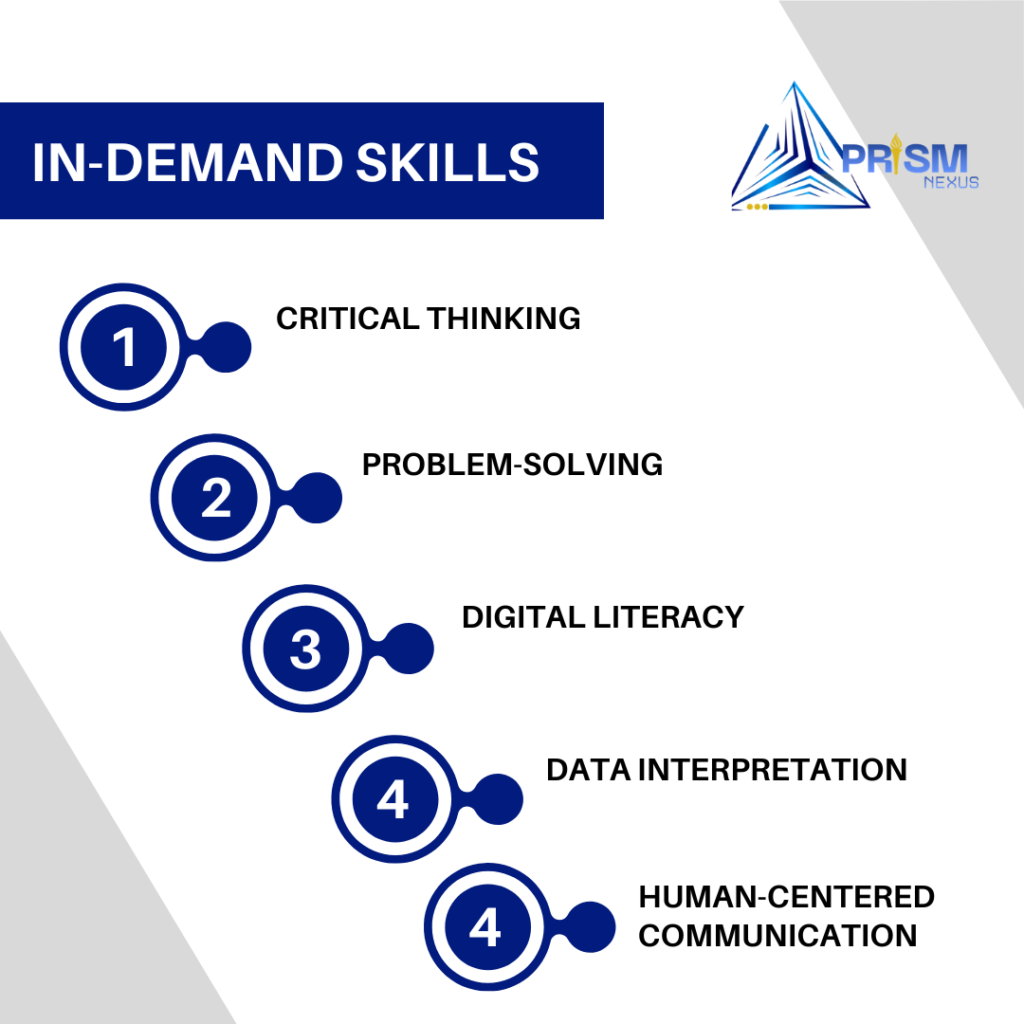
In-demand skills now include:
- Critical thinking
- Problem-solving
- Digital literacy
- Data interpretation
- Human-centered communication
Professionals must continuously evolve to remain relevant in an AI-driven world.
Integrating AI with Evidence-Based Professional Development
The most effective approach is not just using AI—but combining it with research-informed learning strategies.
Organizations that succeed in 2026:
- Align AI tools with real-world application
- Use data to improve training outcomes
- Combine technology with expert-led instruction
- Explore our Research-Informed Professional Development programs
The Role of Training and Consulting Services
AI tools alone are not enough.
Organizations need structured guidance to:
- Implement AI-driven learning systems
- Align training with organizational goals
- Ensure practical application of skills
- Learn more about our Professional Consulting and Training Services
While AI provides the map and the vehicle for professional development, it cannot provide the destination. AI is excellent at teaching the mechanics of leadership, but the art of leadership—empathy, moral judgment, and authentic human connection—remains an exclusively human domain.
In 2026, the most successful professionals are those who leverage AI to accelerate their hard skills and knowledge acquisition, freeing up their cognitive bandwidth to focus on what algorithms cannot replicate: building trust, fostering culture, and driving visionary innovation.
The future belongs to organizations and professionals who combine:
- AI-driven learning
- Evidence-based training
- Continuous skill development
By integrating these elements, professional development becomes a powerful driver of performance, innovation, and long-term success.