Why 60% of Research Proposals Get Rejected (And How to Be in the 40%)
You’ve spent weeks crafting your research proposal. The idea is brilliant. The methodology is sound. You hit submit with confidence.
Two months later: “We regret to inform you…”
According to research on proposal success rates, major funding agencies reject 60-90% of submitted proposals. However, understanding what reviewers seek and how to present compelling proposals dramatically improves your chances.
The difference between funded and rejected proposals rarely lies in idea quality alone. Instead, it depends on how clearly you articulate significance, how convincingly you demonstrate feasibility, and how thoroughly you address reviewer concerns before they arise.
In this comprehensive guide, we’ll walk through every step of developing a winning research proposal from initial concept to final submission, including essential components, common pitfalls, and expert strategies that separate successful proposals from rejected ones.
Understanding What a Research Proposal Is (And Isn’t)
A research proposal is a detailed plan outlining what you intend to study, why it matters, how you’ll conduct the investigation, and what resources you need. It serves multiple critical functions simultaneously.
The Three Core Functions
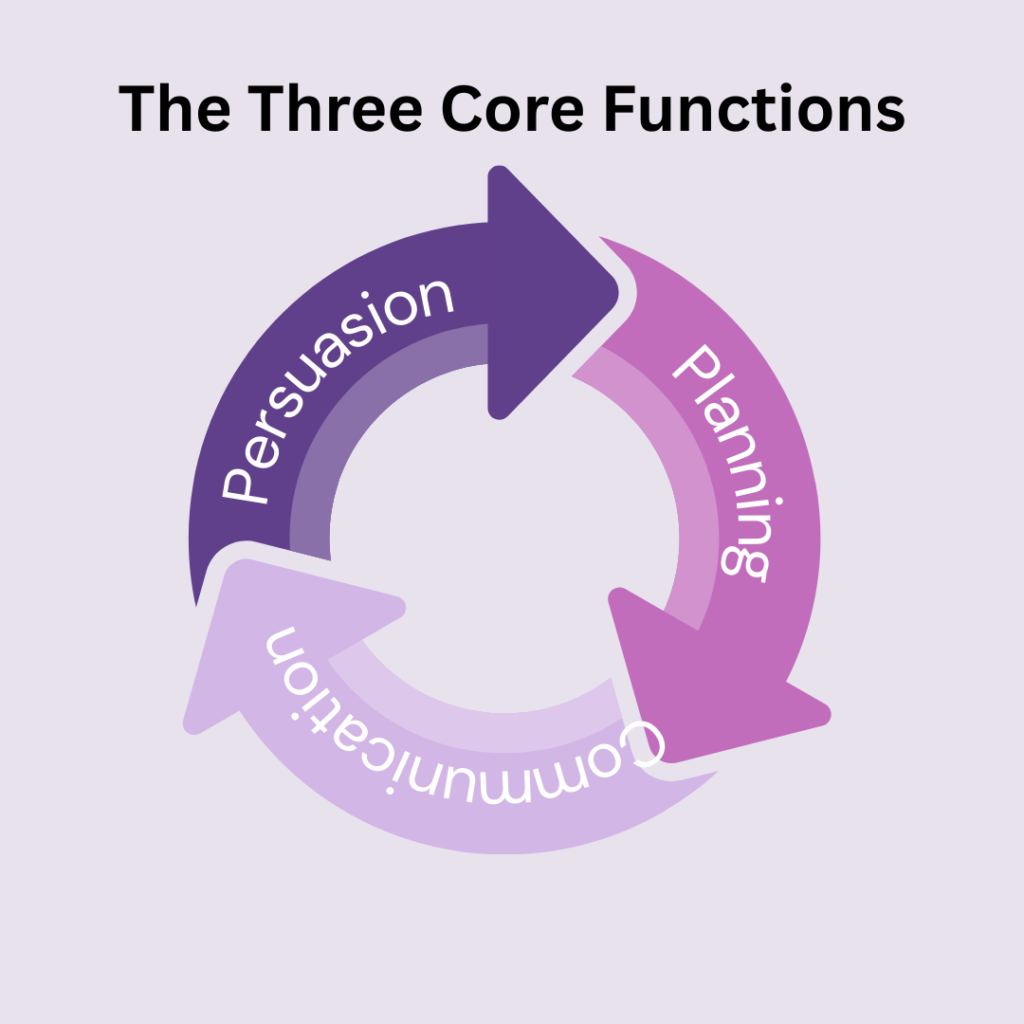
Function 1: Persuasion
Proposals convince reviewers that your research deserves support. You must demonstrate that your question matters, your approach is sound, and you can execute the plan successfully.
Function 2: Planning
Creating proposals forces rigorous thinking about every research aspect—questions, methods, timelines, resources. This planning strengthens eventual execution.
Function 3: Communication
Proposals communicate your research vision to diverse audiences including funders, advisors, and collaborators. Clear communication proves you understand your project thoroughly.
Types of Research Proposals
Different contexts require different proposal types:
Academic Proposals:
- Dissertation/thesis proposals for degree programs
- Course research proposals for academic assignments
- Conference paper proposals
Funding Proposals:
- Government grant applications (NSF, NIH, etc.)
- Foundation grant proposals
- Industry-sponsored research proposals
Organizational Proposals:
- Internal research proposals for organizations
- Policy research proposals for government agencies
- Applied research proposals for nonprofits
While specific requirements vary, all share common essential elements we’ll explore throughout this guide.
The 10 Essential Components Every Proposal Needs
Successful proposals include specific components addressing reviewer questions and concerns systematically.
Component #1: Title
Your title should be clear, specific, and informative while remaining concise.
Effective titles:
- Specify the research topic precisely
- Indicate the approach or population
- Avoid unnecessary words and jargon
- Stay under 15-20 words typically
Example: “The Impact of Mindfulness-Based Interventions on Anxiety Among College Students: A Randomized Controlled Trial”
This title clearly states what (mindfulness interventions), for whom (college students), measuring what (anxiety), and how (RCT).
Component #2: Abstract or Executive Summary
Though written last, the abstract appears first and may be the only section some reviewers read initially. Make every word count.
Abstract essentials (200-300 words):
→ Background – What problem does this address?
→ Objectives – What specifically will you investigate?
→ Methods – How will you conduct the research?
→ Significance – Why does this matter?
→ Expected outcomes – What do you anticipate finding?
Write abstracts after completing the full proposal when you clearly understand all components.
Component #3: Introduction and Background
Set the stage by establishing context and demonstrating why your research matters.
Introduction structure:
- Broad context – The general field or problem area
- Narrowing focus – Specific aspect you’ll address
- Knowledge gap – What’s currently unknown or unresolved
- Your approach – How your research fills the gap
- Significance preview – Why this matters
According to proposal writing research, effective introductions hook readers immediately with compelling problems while establishing credibility through referenced literature.
Component #4: Literature Review
Demonstrate thorough understanding of existing research while identifying gaps your work will address.
Literature review goals:
- Show familiarity with relevant previous research
- Synthesize findings revealing patterns and gaps
- Position your work within ongoing scholarly conversations
- Justify your research questions and approach
- Establish theoretical framework
Focus on recent, relevant studies (primarily last 5 years) while including seminal earlier works. Organize thematically rather than chronologically, and critically analyze rather than simply summarize.
Component #5: Research Questions or Hypotheses
Clearly state what you intend to discover or test. Well-formulated questions guide all subsequent methodological decisions.
Strong research questions are:
→ Specific – Precisely defined, not vague
→ Researchable – Answerable through systematic investigation
→ Significant – Worth investigating, will advance knowledge
→ Feasible – Achievable within your constraints
→ Clear – Unambiguous to readers
For quantitative studies, formulate testable hypotheses. For qualitative research, pose open-ended questions exploring phenomena.
Component #6: Research Methodology
The methodology section typically represents your proposal’s longest and most detailed component. Reviewers scrutinize this carefully.
Methodology must address:
Research Design:
- What overall approach will you use (experimental, survey, case study, etc.)?
- Why is this design appropriate for your questions?
- What are the design’s strengths and limitations?
Population and Sampling:
- Who or what will you study?
- How will you select participants or cases?
- What’s your target sample size and rationale?
- How will you recruit participants?
Data Collection:
- What specific data will you collect?
- What instruments or measures will you use?
- Are instruments validated or will you create new ones?
- What procedures will you follow?
Data Analysis:
- How will you analyze collected data?
- What statistical tests or analytical approaches?
- What software will you use?
- How will you ensure rigor?
Timeline:
- What are major project phases?
- How long will each phase take?
- What’s the overall project duration?
Furthermore, address potential challenges and how you’ll mitigate them. This demonstrates thoughtful planning and realistic expectations.
Component #7: Significance and Impact
Explicitly articulate why your research matters and what difference it will make.
Significance dimensions:
- Theoretical – How will findings advance scholarly understanding?
- Practical – How might results inform practice or policy?
- Methodological – Will you develop or refine research methods?
- Social – How might this benefit society or specific communities?
Don’t assume significance is obvious. Spell out clearly who will benefit and how.
Component #8: Budget and Resources
For funding proposals, detailed budgets are essential. Even unfunded proposals benefit from resource discussions demonstrating feasibility.
Budget categories typically include:
→ Personnel – Salaries, wages, benefits
→ Equipment – Necessary tools, technology, materials
→ Travel – Conference attendance, data collection trips
→ Participant costs – Incentives, reimbursements
→ Supplies – Consumables, software licenses
→ Other – Publication fees, transcription, etc.
Justify each cost explaining why it’s necessary. Show you’ve researched realistic costs rather than guessing.
Component #9: Ethical Considerations
Demonstrate that you’ve thought through ethical implications and will protect participants.
Ethical elements:
- IRB or ethics committee approval plans
- Informed consent procedures
- Confidentiality and privacy protections
- Potential risks and mitigation strategies
- Data security measures
- Conflicts of interest disclosure
Even if formal ethics approval isn’t required, discussing ethical considerations shows professionalism and thoughtfulness.
Component #10: References
Include complete, properly formatted citations for all sources mentioned. This demonstrates scholarly rigor and enables reviewers to verify claims.
Use appropriate citation style for your field (APA, MLA, Chicago, etc.) consistently throughout. Reference management software like Zotero or Mendeley helps maintain accuracy and consistency.
The Research Proposal Development Process
Follow this systematic process to develop strong proposals efficiently.
Step 1: Identify Your Research Topic and Question
Begin with genuine curiosity about something you want to understand. Strong proposals emerge from authentic interest sustained over months or years.
Topic selection criteria:
- Personal interest and passion
- Significance to the field or society
- Feasibility given your resources and constraints
- Original contribution to knowledge
- Alignment with funding priorities (if applicable)
Refine broad interests into specific, focused questions through literature review and consultation with advisors or colleagues.
Step 2: Conduct Preliminary Literature Review
Before drafting, thoroughly review existing research to understand the landscape, identify gaps, and refine your questions.
Literature review goals at this stage:
→ Understand what’s already known
→ Identify contradictions or controversies
→ Recognize methodological approaches used
→ Discover gaps your research could address
→ Find theoretical frameworks to adopt or adapt
Take detailed notes and organize references systematically from the start.
Step 3: Develop Your Research Design
Make methodological decisions aligned with your research questions and practical constraints.
Key design decisions:
- Quantitative, qualitative, or mixed methods?
- What specific approach within that paradigm?
- Who/what will you study and how will you sample?
- What data collection methods are most appropriate?
- How will you ensure validity and reliability?
- What analytical approaches will you use?
Consult methodological experts or texts to strengthen your design choices.
Step 4: Create a Detailed Outline
Before writing, outline every section with bullet points covering key content. This roadmap keeps writing organized and ensures you address everything required.
Outline benefits:
- Reveals gaps in your thinking before drafting
- Provides structure preventing rambling
- Enables feedback on logic before writing
- Makes the actual writing process faster
- Ensures all required elements are included
Share outlines with advisors or colleagues for feedback before investing time in full drafts.
Step 5: Write the First Draft
Focus on getting ideas down rather than perfection. You’ll revise extensively later.
Drafting tips:
→ Write sections in whatever order feels natural (not necessarily front to back)
→ Don’t stop to perfect sentences—maintain forward momentum
→ Leave placeholders for information you need to look up
→ Write more than you need, then cut rather than trying to meet length minimums
→ Take breaks to maintain fresh perspective
Set daily or weekly writing goals to maintain steady progress.
Step 6: Revise and Refine
Great proposals emerge through revision, not first drafts. Plan time for multiple revision rounds.
Revision focus areas:
Clarity: Can reviewers easily understand your ideas?
Logic: Do arguments flow coherently?
Evidence: Are claims properly supported?
Completeness: Have you addressed all requirements?
Concision: Can you say it more efficiently?
Read your proposal aloud to catch awkward phrasing and unclear explanations.
Step 7: Get Feedback
External perspectives identify blind spots and weaknesses you’ve missed.
Feedback sources:
- Academic advisors or mentors
- Colleagues familiar with your research area
- Methodological experts
- Writing centers or editorial services
- Peer review groups
Seek feedback early enough to act on it before deadlines.
Step 8: Final Polish
After incorporating feedback, give your proposal final polish ensuring professional presentation.
Final checks:
→ Proofread carefully for typos and errors
→ Verify all formatting requirements are met
→ Ensure consistent citation style throughout
→ Check that all figures and tables are clear
→ Confirm all required documents are included
→ Test that any links or appendices work properly
Ask someone unfamiliar with your work to proofread fresh eyes catch errors you’ve become blind to.
Common 5 Mistakes That Doom Proposals
Learn from others’ errors to avoid these proposal pitfalls.
Vague or Overly Broad Research Questions
Questions like “How does technology affect education?” are too broad to meaningfully address. Narrow to specific, answerable questions.
Solution: Be specific about what, who, where, when, and how.
Insufficient Literature Review
Reviewers quickly spot superficial engagement with existing research. Failing to cite key works or missing recent developments signals inadequate preparation.
Solution: Conduct thorough, systematic literature reviews citing recent and seminal works.
Methodology-Question Mismatch
Using inappropriate methods for your questions undermines the entire proposal.
Solution: Ensure methods can actually answer your questions and justify why you chose them.
Unrealistic Timelines or Budgets
Proposing to complete complex research in impossibly short timeframes or with inadequate resources signals poor planning.
Solution: Create realistic schedules with buffer time and thoroughly research actual costs.
Ignoring Guidelines
Missing required components, exceeding length limits, or violating formatting rules often leads to automatic rejection.
Solution: Read guidelines carefully, create checklists, and verify compliance before submission.
From Proposal to Funded Research
Developing strong research proposals requires significant time, thought, and effort. However, this investment pays dividends through funded projects, approved dissertations, and successful research careers.
Key success factors:
- Start early allowing time for thorough development and revision
- Clearly articulate significance answering “so what?” preemptively
- Demonstrate methodological rigor showing you can execute the plan
- Write clearly for busy reviewers scanning dozens of proposals
- Seek feedback and revise based on input
- Follow all guidelines and requirements precisely
Remember that even experienced researchers face rejection. Learn from feedback, revise, and resubmit to improve your proposal and increase success odds.
FAQs About Research Proposal Development
Q: How long should a research proposal be?
A: Length varies by context. Dissertation proposals typically run 10-25 pages. Grant proposals range from 5-20 pages depending on funder requirements. Always follow specific guidelines provided.
Q: How long does it take to write a good proposal?
A: Plan for 4-8 weeks minimum for substantial proposals, including time for research, writing, feedback, and revision. Complex grant proposals may require 3-6 months.
Q: Can I use first person in proposals?
A: This depends on field and funder preferences. Many funders now encourage first person as it’s clearer and more direct. Check guidelines or examples from your field.
Q: What if I don’t know my exact methodology yet?
A: You should have a clear methodological approach even if some details remain flexible. Specify your general design and justify why it’s appropriate, noting where you’ll refine specifics.
Q: How do I make my proposal stand out?
A: Focus on clear significance, innovative approaches, strong preliminary data if applicable, and excellent writing. Demonstrate you understand the field deeply and can execute your plan.
Share this guide to help researchers develop proposals that get funded and advance knowledge.