Author: Prof. Armando Beurdon
The era of seamless, low-friction globalization is over. Organizations can no longer treat geopolitical tensions, war, and defense as external, low-probability risks. These forces are now central drivers of corporate strategy, demanding a complete overhaul of how we manage supply chains, capital, and talent. Management science must evolve from optimizing efficiency to building radical resilience in a world where global political fragmentation is the new normal.
📉 The Business Cost of Turmoil: Facts and Figures
Geopolitical instability is no longer a distant threat; it translates directly into tangible, bottom-line costs and risks for businesses globally.
I. Economic Impact and Uncertainty
- Global Cost: A hypothetical geopolitical conflict causing widespread trade disruption could cost the global economy an estimated US$14.5 trillion over a five-year period, with Europe alone potentially losing up to US$3.4 trillion due to reliance on imports like semiconductors (Lloyd’s, 2024).
- Investment Hit: Geopolitical risk shocks had a substantial impact on real GDP, investment, exports, and inflation in 2022–2024. Investment was particularly hard hit in Central and Eastern European (CEE) countries, with a cumulative drop of around three percentage points due to increased risk premiums (ECB Blog, 2025).
- Geoeconomic Confrontation: Geopolitical tensions are associated with the rising risk of Geoeconomic confrontation (sanctions, tariffs, investment screening), which was ranked as the 3rd highest global risk expected to present a material crisis in 2025 (World Economic Forum, 2025).
II. The Supply Chain Fracture
The shift toward protectionist policies and conflict avoidance is fundamentally reshaping global trade flows.
- Supply Chain Shift: As companies navigate tariffs and sanctions, 43% of surveyed respondents are planning to shift more of their supply chain footprint to the United States over the next three years, and 38% plan to reduce their supply chain presence in China (McKinsey, 2025).
- Risk Mitigation Strategies: When facing tariff impacts, 45% of companies are increasing inventories, 39% are pursuing dual sourcing strategies for components, and 33% are developing nearshoring or onshoring plans (McKinsey, 2025).
- Cost Escalation: Fueled by conflict and trade protectionism, the cost of global business operations has reached a 10-year peak (Maplecroft, 2024).
🔀 Redefining Organizational Strategy
To survive and thrive in this environment, organizations must shift their management focus from Lean Efficiency to Adaptive Resilience. This requires adopting a Strategic Foresight Model that integrates political intelligence directly into corporate governance.
1. Strategic Redundancy (The Anti-Lean Model)
The relentless pursuit of cost-saving through just-in-time (JIT) and single-source supply has proven fragile. The new imperative is strategic redundancy:
- Friend-Shoring and De-risking: Companies are intentionally moving production and sourcing to geographically and politically aligned (“friendly”) nations. This requires mapping supply chains down to the raw material level and assigning a Geopolitical Risk Score (GRS) per supplier (Sinolytics, 2025).
- Buffer Stocks: Building strategic inventory of critical components, raw materials, or finished goods that are susceptible to disruption (e.g., semiconductors, rare earth minerals) to maintain business continuity during short-term shocks.
2. Geopolitical Intelligence as a Core Function
Geopolitical risk assessment can no longer sit in the risk department; it must be a C-suite competency, guiding investment and market strategy.
- Scenario Modeling: Developing complex, multi-variable geopolitical scenarios to test the organization’s financial and operational fitness. This moves beyond simple SWOT analysis to model the impact of sanctions, trade wars, or regional conflicts on specific revenue streams and fixed assets.
- Local Stakeholder Partnership: In politically volatile emerging markets, successful multinational enterprises (MNEs) prioritize local stakeholder partnerships and adaptive strategic planning to navigate regulatory volatility and political instability (Pawar, 2025).
3. Reimagining Talent and Security
The impact of geopolitical tension extends to the workforce and cybersecurity, requiring new defense imperatives.
- Workforce Agility: Organizations must develop protocols for evacuation or operational cessation in conflict zones, and foster workforce agility to manage cross-border workforce challenges amid geopolitical shifts (SHRM, 2025).
- Cyber Resilience: Global instability fosters an environment where cybercrime is increasingly prevalent. Investing in employee education and AI-driven threat detection systems is now a national security imperative for the firm (SHRM, 2025).
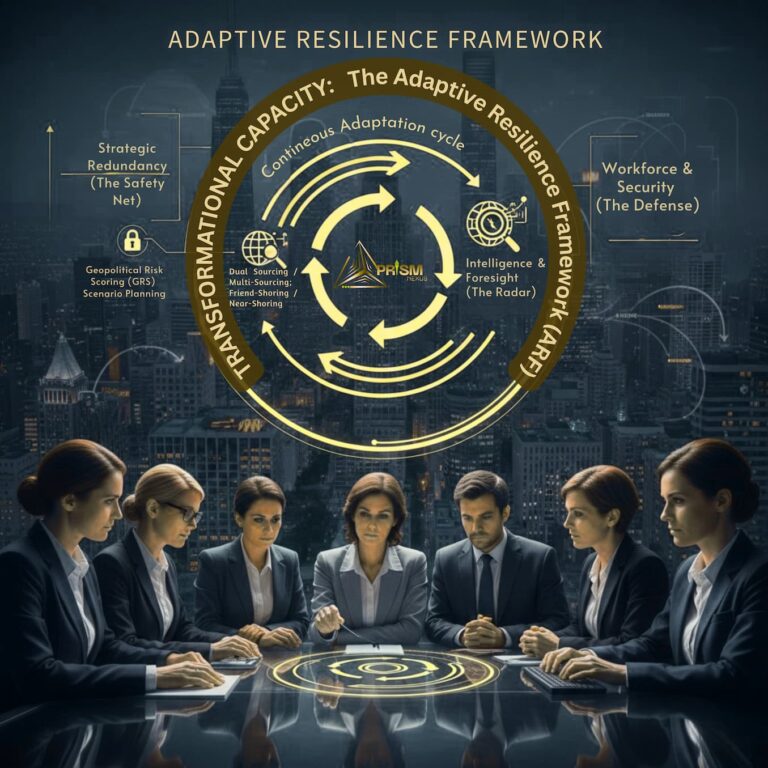
Figure 1: Proposed Framework: The Adaptive Resilience Framework (ARF)
📈 Proposed Framework: The Adaptive Resilience Framework (ARF)
The new management framework must move beyond traditional risk management to integrate geopolitical intelligence and build “Adaptive Resilience.” The overarching goal is to cultivate “Transformational Capacity”—the ability to simultaneously navigate immediate turbulence and drive long-term, strategic change.
Core Components of the ARF
The ARF operates on a continuous feedback loop:
| Pillar | Definition | Key Actions |
| 1. Intelligence & Foresight (The Radar) | Continuous collection and analysis of geopolitical, economic, and social data to anticipate disruptions. | Geopolitical Risk Scoring (GRS) for suppliers; Scenario Planning workshops (Red Team); Integrated Intelligence Units. |
| 2. Strategic Redundancy (The Safety Net) | Intentionally building buffers and alternative pathways into critical systems (supply chains, capital flows, market access). | Dual Sourcing / Multi-Sourcing; Friend-Shoring / Near-Shoring; Maintain Strategic Inventory (Buffer Stock). |
| 3. Workforce & Security (The Defense) | Protecting human capital and digital infrastructure from geopolitical and cyber threats. | Employee Safety & Mobility Protocols; Cyber Resilience Programs (AI-driven defense); Data Sovereignty & Compliance. |
Integration and Continuous Loop: These three pillars are interconnected and driven by Transformational Capacity. Intelligence informs redundancy; redundancy relies on a secure, agile workforce. The outcomes feed back into refined intelligence gathering. By adopting the ARF, organizations can move beyond reacting to crises and proactively shape their future.
References
- ECB Blog. (2025). From headlines to hard data: mapping the uneven impact of geopolitical risk in Europe. European Central Bank.
- Lloyd’s. (2024). Geopolitical Conflict Could Cost Global Economy $14.5 Trillion Over 5 Years. Insurance Journal.
- Maplecroft. (2024). Cost of doing business at 10-year high as geopolitics takes toll on global trade. Maplecroft.
- McKinsey & Company. (2025). Supply chain risk pulse 2025: Tariffs reshuffle global trade priorities.
- Pawar, K. S. (2025). Geopolitical Risk Management and Corporate Strategy: Navigating Global Uncertainty in Emerging Markets. SAMA Journal of Strategic Management and Global Affairs, 1(1).
- SHRM. (2025). Top 5 Geopolitical Threats to Businesses in 2025. Society for Human Resource Management.
- Sinolytics. (2025). Supply Chain Services | Navigating Geopolitical Risk with Sinolytics.
- World Economic Forum (WEF). (2025). Global Risks 2025: A world of growing divisions.